

Live Action Stations vs. Traditional Holiday Buffets: Why Silicon Valley Companies Are Switching
The buffet line versus the gathering point — what changes when the food becomes part of the experience.
A Buffet Feeds People. It Doesn’t Bring Them Together.
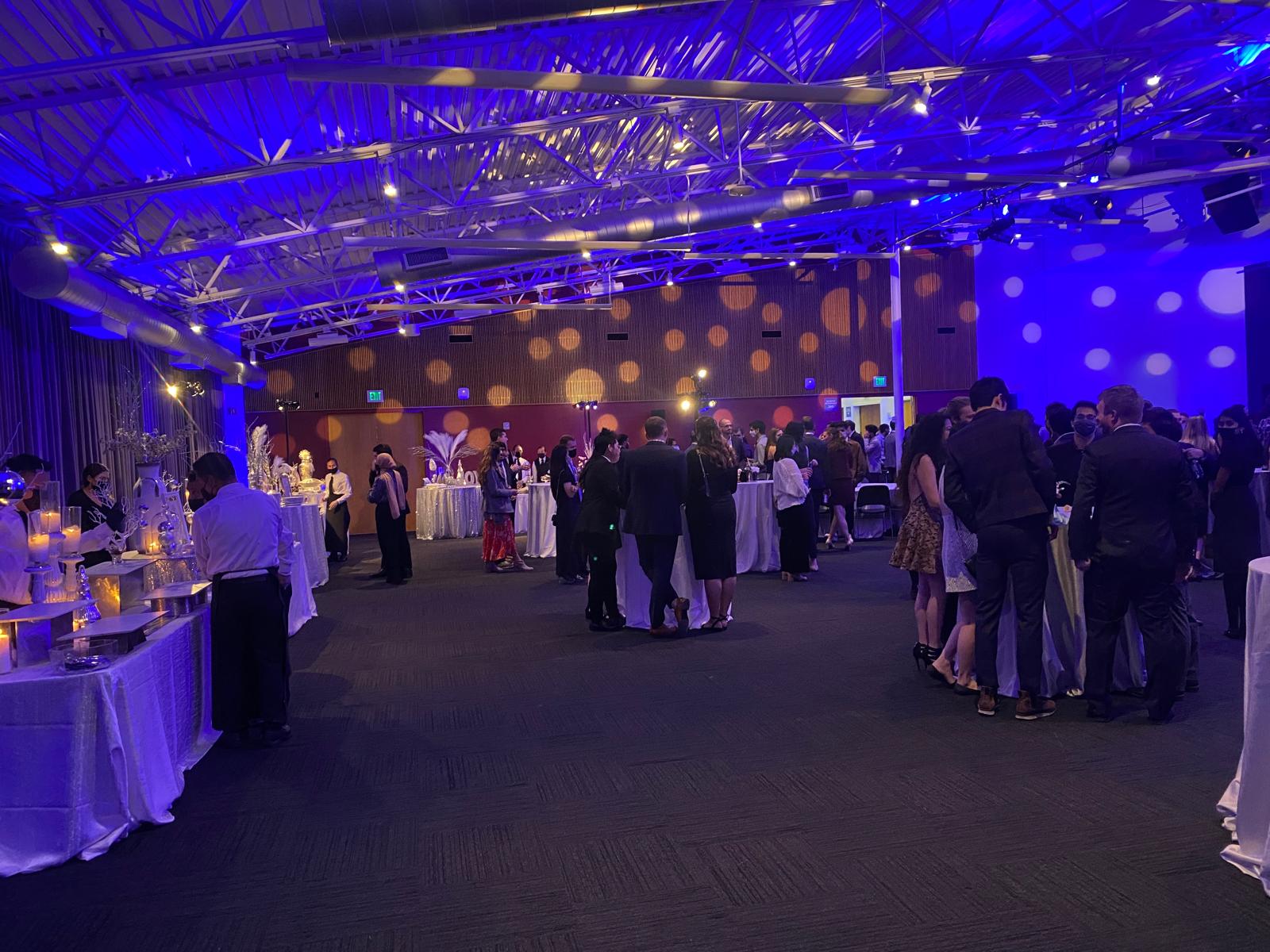
A traditional plated dinner or buffet line returns guests to assigned tables — or a chafing-dish queue — and keeps them there for the length of the meal. Interactive chef stations do something categorically different: they distribute guests throughout the venue, create multiple natural gathering points, and give people something genuinely interesting to do and discuss throughout the reception.
For a holiday party specifically, where the goal is connection rather than just a meal, that difference matters more than at almost any other company event of the year.
Live Action Stations, Side by Side With the Traditional Buffet
| Traditional Buffet | Live Action Stations | |
|---|---|---|
| Guest experience | Guests queue, plate, and return to seating | Guests gather at the station and stay to watch and talk |
| Dietary handling | Often a separate “special” plate | Dual-paella model — same table, no separation |
| Energy in the room | Static after the initial serving rush | Builds as the chef works the pan |
| Kitchen requirement | Often needs commercial kitchen access | Fully self-contained — no commercial kitchen needed |
The Moment That Changes the Room
The moment a PSRT chef fires the burners and the aroma of saffron-infused sofrito begins building in the room, people drift toward the station naturally — not because they were prompted to, but because something genuinely interesting is happening there. That’s the live-station effect, and it’s difficult to replicate with a buffet line, however well-stocked.
Handling a Dietary-Diverse Team
Several Bay Area corporate clients have told us that paella has become their annual event format specifically because it’s the first time their dietary-diverse team has felt equally included in the dining experience. For 60+ guests, PSRT runs two paella varieties simultaneously so every guest serves from the same station.
What the Setup Requires
PSRT uses 80–100cm traditional steel paella pans, propane burner rigs, and ingredients sourced from Spain — Bomba rice, saffron, and extra virgin olive oil — to produce paella the way it’s made on the Valencian coast. The setup arrives self-contained. No commercial kitchen needed. And the socarrat — the caramelized crust at the bottom of the pan that every paella chef works toward — is worth the wait. PSRT’s chefs never rush this phase, regardless of timeline pressure.
See Live Stations at Your Holiday Party
Tell us your guest count and date — we’ll build a custom quote within 24 hours.
Request a Quote